
Researchers have outlined five crucial actions to help the world prepare for a potentially strongest-on-record El Nino, aiming to reduce its severe health consequences like infectious diseases, malnutrition, and heat-related conditions. These recommendations, published in The Lancet, emphasise a comprehensive risk overview and early preparatory measures.

The southwest monsoon has withdrawn from India, while the northeast monsoon has commenced in southern regions, bringing a wet spell. This year's southwest monsoon saw a rainfall deficit, largely attributed to the strengthening El Nino conditions, which are expected to persist until February 2027 and could become the strongest since 1950.

Change of guard in some states and evolving El Nino dynamics are triggering fresh actions on raging water-sharing disputes in several states.

Climate experts explain how El Nino and climate change are intricately linked, with El Nino delaying monsoon onset and climate change intensifying rainfall. This new reality is altering the Indian monsoon's behaviour, leading to short-duration, high-intensity rain spells, especially in western and northwestern regions.

A report by the University of Chicago's Energy Policy Institute projects approximately 15,800 additional heat-related deaths in India over the next six months due to the 'super El Nino' phenomenon. Globally, nearly 451,000 additional deaths are anticipated. Experts in India emphasize the need for swift action, including implementing Heat Action Plans and focusing on vulnerable populations, while also urging caution regarding model-based projections.

The Centre has reviewed the monsoon situation, noting a reduced rainfall deficit and ongoing preparedness for the kharif season amidst El Nino concerns. A high-level meeting chaired by the Principal Secretary to the Prime Minister discussed measures across various sectors, emphasising continuous monitoring and coordinated action to mitigate potential impacts on agriculture, water resources, and essential commodities.

The India Meteorological Department (IMD) has predicted below normal monsoon rains for India this year, citing the potential emergence of El Nino conditions. This could significantly impact the country's agriculture-dependent economy.

India's hydropower generation has been significantly constrained in July due to the El Nio effect, which has weakened the southwest monsoon and reduced reservoir levels. This decline, following a 21 per cent year-on-year drop in June 2026, is forcing greater reliance on coal generation and straining grid flexibility amidst rising power demand.

Moody's Ratings has sharply increased India's GDP growth forecast for fiscal 2026-27 to 7 per cent, making it the fastest among G20 economies, driven by economic resilience despite the Middle East conflict. However, the agency flagged significant inflation risks stemming from elevated oil prices and potential El Nino disruptions.
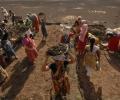
The Indian government has identified 111 districts as 'most vulnerable' to crop damage due to a 43 per cent monsoon deficit, driven by El Nino, which threatens kharif sowing. Agriculture Minister Shivraj Singh Chouhan stated that weak monsoon conditions are expected to persist until July 2, prompting contingency plans and recommendations for alternative, less water-intensive crops.

The Brihanmumbai Municipal Corporation (BMC) has announced a 10 per cent water cut across Mumbai starting May 15, citing concerns over a below-normal monsoon forecast due to the El Nino weather pattern. The current water stock in the city's seven lakes is expected to last until July 6.

"Rather than worrying, preparation is required. Contingency plans will be made for affected districts and crop changes will be considered wherever necessary"
We should be prepared for any impact of the dreaded weather pattern.
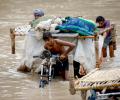
The El Nino impact on the Indian monsoon typically manifests by way of extended break in rainfall.

Prime Minister Narendra Modi has urged states to balance the opportunities presented by artificial intelligence with the need to safeguard against social challenges like cyber fraud and drug abuse. He also warned of the risks posed by El Nino conditions, calling for stronger water conservation measures and emphasising the collective resolve towards a 'Viksit Bharat'.
A private sector weather forecaster, Skymet, and some global forecasters have already issued warnings for this year that this could happen.
If the weather phenomenon hits India, impact will be felt across sectors; be cautious on stocks based on rural consumption.
Senior officials of the India Meteorological Department said they were now more confident that El Nino would indeed appear during the second half of the southwest season, compared to April when the last official forecast was made.
The El Nino weather phenomenon will bring drier winter weather to Indonesia, India, Mexico, Central America and northern Brazil, US government weather forecasters said.

El Nino, which refers to warmer-than-average sea surface temperatures in the central and eastern tropical Pacific Ocean, will likely to keep CPI inflation up at 8-10 per cent in the second half of 2014 and will pose a 50-70 basis point risk to this fiscal's growth expectation, the report by financial services major Bank of America Merrill Lynch said.

Less-than-expected rainfall and a poor spatial distribution, experts say, can rekindle fears of a rise in food and fuel inflation that can have an impact on the RBI's monetary policy. The fear of less than optimal rainfall due to El Nino this year, analysts believe, is the biggest short-term risk for the markets, which they said has not been fully priced in yet by them. Monsoon set over Kerala on June 08, a week later than its scheduled date.
El Nino, an anomalous rise in sea surface temperature off the Peru coast, has been observed to often cause the Indian monsoon to flounder, resulting in poor rainfall. Nearly 60 per cent of agricultural land is wholly rain-dependent.

"This year, the Southwest Monsoon is likely to set over Kerala on May 31 with a model error of four days," the India meteorological department said on Wednesday.
.jpg)
An El Nino is a temporary change in the climate of the Pacific Ocean, in the region around the equator.

Wholesale price-based inflation eased to a nine-month low of 4.68 per cent in February, while retail inflation slowed to a 25-month low of 8.1 per cent.

Officials in the weather department said the monsoon is expected to be below normal because of the El-Nino effect.

The Maharashtra government announced a minimum 10 per cent water cut for all urban and rural local bodies starting October 16 due to a deficient monsoon and El Nino impact. The state is prioritising drinking water, planning for water stocks until August 2027, and implementing measures like preventing leakage, reusing treated wastewater, and curbing unauthorised extraction.

The government must expand the farm insurance cover and advice banks and financial institutions to settle crop insurance claims in the drought-hit areas without delay.

IMD will present its month-wise and region-wise forecast in June.

Rainfall in August is predicted to be below normal (less than 94 per cent of LPA), but the situation is expected to improve comparatively in September, the IMD said.
The India Meteorological Department in its first forecast for 2014 had said southwest monsoon will be below normal at 95 per cent of the long-period average.

'We should expect extreme heat, extreme rains, floods, landslides and maybe cyclones. Not just this year, in the coming year as well.'

El Nino is often associated with below average warmer, dry weather across Asia Pacific region.

The southwest monsoon has officially set over Kerala, albeit delayed from its typical June 1 start. The India Meteorological Department (IMD) forecasts below-normal rainfall for the season, expecting around 90% of the long-period average, primarily due to the emerging El Nino conditions.

If El Nino condition affects the monsoons, as is being forecast by foreign agencies, it can slow down the economy to 5.2 per cent next fiscal from a projected 6 per cent.

The Indian Met Department has predicted a below normal monsoon.
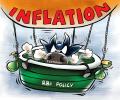
The Reserve Bank of India (RBI) has marginally raised its retail inflation forecast for the current fiscal year (FY27) to 5.2 per cent from 5 per cent, citing increasing price pressures across various commodities. Concurrently, the Monetary Policy Committee (MPC) unanimously decided to hike the key interest rate (repo) by 25 basis points to 5.5 per cent, shifting its stance to 'calibrated tightening'.

A rise in farm sector is estimated to raise demand for industrial goods and services, it added.
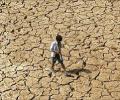
About 60 per cent of net sown area of the country is rain-fed. With every one per cent deficit in rains, the country's gross domestic produce falls by 0.35 per cent.
